
Online Growth Strategy for Traditional Businesses Moving Digital
Many traditional businesses do not fail online because their products or services are weak. They fail because they move digital without a clear growth system.
They create a website, post on social media, run a few ads, maybe start email marketing, and expect online leads to come in automatically. But digital growth does not work that way.
A traditional business already has strengths: reputation, customer trust, offline relationships, word-of-mouth, local credibility, industry experience, and real-world proof. The challenge is turning those strengths into a structured online growth strategy that brings visibility, qualified leads, conversions, sales follow-up, and measurable revenue.
An online growth strategy helps traditional businesses move digital with clarity. It connects your website, content, SEO, landing pages, ads, automation, CRM, sales process, and customer journey into one growth system.
Without this system, digital marketing feels scattered. With it, your business can generate better leads, reduce drop-offs, improve conversion rates, lower customer acquisition cost, and create more predictable revenue.
Google’s SEO Starter Guide explains that SEO is about helping search engines understand your content and helping users find your site and decide whether they should visit it. For traditional businesses moving digital, this means your website and content must be built for both discovery and decision-making.
CTA: Build Your Digital Growth Foundation With Arevei
If your traditional business wants to move online but your website, content, marketing, and follow-up feel scattered, Arevei can help.
Visit https://www.arevei.com/ to build a conversion-focused online growth system with website strategy, CRO, UX improvement, landing page optimization, AI marketing automation, speed optimization, and lead-generation strategy.
What Is an Online Growth Strategy?
An online growth strategy is a structured plan for using digital channels to attract, convert, nurture, and retain customers.
It is not only digital marketing. It is not only a website. It is not only ads. It is not only social media.
A complete online growth strategy connects:
- Website strategy
- SEO and content
- Social media visibility
- Paid campaigns
- Landing pages
- Lead capture forms
- WhatsApp or email follow-up
- CRM or lead tracking
- Marketing automation
- Sales process
- Customer onboarding
- Analytics and reporting
- Conversion rate optimization
For a traditional business, the goal is not to copy what digital-first companies do. The goal is to take existing business trust and convert it into online visibility, qualified inquiries, better follow-up, and revenue.
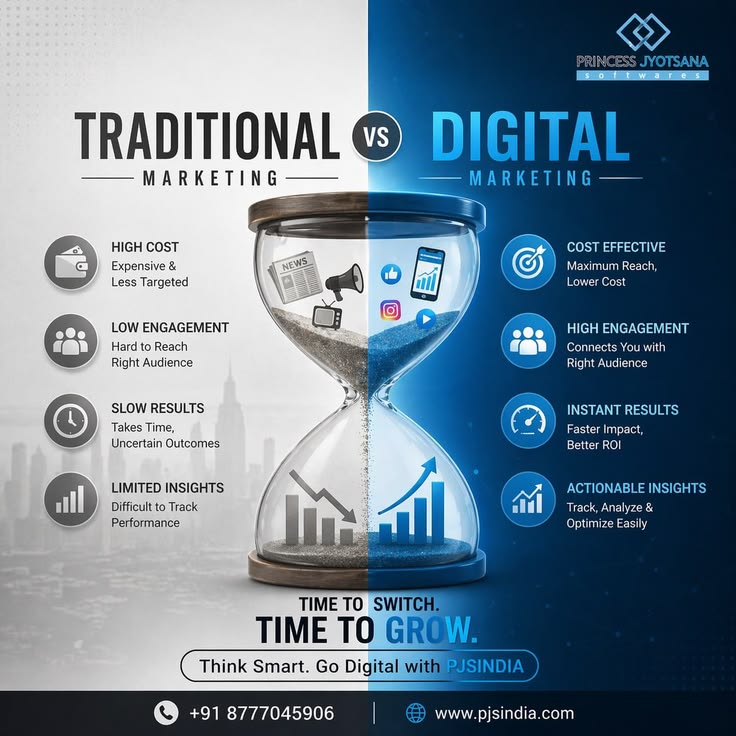
Traditional Business vs Digitally Aligned Business
| Area | Traditional Business Approach | Online Growth Strategy Approach |
|---|---|---|
| Customer acquisition | Referrals, walk-ins, personal network | SEO, website, content, ads, social, referrals, automation |
| Sales follow-up | Calls, WhatsApp, manual reminders | CRM, lead tracking, automated reminders, sales workflows |
| Trust-building | Word-of-mouth and reputation | Testimonials, case studies, reviews, proof, educational content |
| Lead capture | Phone calls and offline inquiries | Forms, landing pages, WhatsApp, booking systems, lead magnets |
| Marketing | Occasional posts or ads | Full-funnel strategy with measurable goals |
| Reporting | Gut feeling and sales memory | Dashboards, conversion data, source tracking, ROI reports |
| Growth | Dependent on owner or sales team | System-driven, measurable, and scalable |
Why Traditional Businesses Need an Online Growth Strategy
Traditional businesses often have strong operations but weak digital systems.
They may already know how to serve customers well. They may have a loyal base. They may have years of credibility. But when buyers start searching online, comparing options, reading reviews, checking websites, and expecting fast responses, offline reputation alone is not enough.
A strong online growth strategy helps with:
- More qualified leads
- Higher conversion rates
- Better customer acquisition
- Lower wasted ad spend
- Faster sales follow-up
- Improved customer trust
- Better local and organic visibility
- Higher consultation bookings
- More predictable revenue
- Stronger ROI from digital campaigns
McKinsey describes digital transformation as the rewiring of an organization to create value by continuously deploying technology at scale. This matters because moving digital is not only about launching a website. It is about connecting technology, processes, people, and customer experience so the business can create measurable value.
The Real Problem: Going Digital Without a System
Many traditional businesses make the same mistake.
They start with tools before strategy.
They buy software, create social media accounts, build a website, run ads, and add automation without answering the most important questions:
- Who is the ideal customer?
- What problem are we solving?
- What offer should we promote first?
- What should the website convert visitors into?
- Which channel should we prioritize?
- What happens after a lead submits a form?
- How do we measure lead quality?
- How do we follow up with leads?
- How do we know what is working?
Without these answers, online growth becomes expensive and confusing.
Key Components of an Online Growth Strategy
A strong online growth strategy for traditional businesses should include seven core components.
1. Clear Digital Positioning
Before building anything online, define how your business should be understood in the digital market.
Traditional businesses often explain themselves based on reputation or personal relationships. Online, the visitor does not know you yet. Your positioning must be clear within seconds.
You need to define:
- Who you serve
- What problem you solve
- What outcome you help customers achieve
- Why customers should trust you
- What makes you different
- What action the visitor should take next
Example
Weak positioning:
“We provide complete business solutions.”
Stronger positioning:
“We help manufacturers improve operational visibility with custom ERP, automation, and reporting systems.”
The second version is clearer because it identifies the audience, problem, solution, and outcome.
2. Conversion-Focused Website
Your website is the center of your online growth strategy.
For traditional businesses, a website should not only look professional. It should convert visitors into leads, calls, consultations, bookings, purchases, or inquiries.
A strong conversion-focused website includes:
- Clear headline
- Strong value proposition
- Service-specific pages
- Trust proof
- Case studies or examples
- Reviews or testimonials
- Fast-loading pages
- Mobile-friendly design
- Strong CTAs
- Simple contact forms
- WhatsApp or call options where relevant
- FAQs that handle objections
- SEO-friendly content structure
If your website is only a digital brochure, it will not support growth properly. Arevei helps businesses with conversion-focused website development designed around leads, conversions, and business outcomes.
3. SEO and Content Strategy
Traditional businesses often depend on referrals. SEO helps you become discoverable when potential customers search for your products, services, problems, or solutions.
A strong content strategy should target:
- Problem-aware searches
- Service-related searches
- Local searches
- Comparison searches
- Pricing-related questions
- Buyer objections
- Industry education
- Case-study-based trust
- FAQ-style queries
Google Search Central recommends creating content that helps search engines understand pages and helps users decide whether to visit your site. This makes SEO and user decision-making part of the same growth system.
Content Examples for Traditional Businesses
| Business Type | Content Topic Example | Business Goal |
|---|---|---|
| Clinic | How to Choose the Right Physiotherapy Clinic | Consultation bookings |
| Manufacturer | How Automation Reduces Production Delays | B2B inquiries |
| Real Estate Firm | What to Check Before Buying Commercial Property | Qualified buyer leads |
| Coaching Institute | How to Choose the Right Course After Graduation | Student inquiries |
| Interior Firm | Modular Kitchen Cost and Design Guide | Project leads |
| Legal Consultant | Documents Needed for Company Registration | Consultation leads |
4. Landing Page Strategy
A landing page is a focused page created for one campaign, audience, offer, or service.
Traditional businesses often send all traffic to the homepage. This weakens conversion because the homepage is usually too broad.
Use landing pages for:
- Google Ads
- Social media campaigns
- WhatsApp campaigns
- Email campaigns
- Service-specific offers
- Lead magnets
- Consultation booking campaigns
- Local campaigns
- Seasonal promotions
A strong landing page optimization strategy helps your business match traffic intent with a focused conversion path.
5. Lead Capture and Sales Follow-Up
Lead generation does not end when someone submits a form.
For traditional businesses, this is often where growth leaks happen.
Common problems include:
- Leads sit in inboxes
- Sales team replies late
- No lead source tracking
- No qualification process
- No follow-up reminders
- No CRM
- No automated confirmation
- No reactivation of old leads
A strong lead capture system should include:
- Simple forms
- Clear CTA
- Lead source tracking
- CRM or lead sheet
- Instant notification
- Automated confirmation
- Follow-up reminders
- Lead status tracking
- Sales notes
- Re-engagement workflow
HubSpot explains that marketing automation helps automate repetitive marketing tasks such as email campaigns, social posting, and lead nurturing, while enabling more personalized experiences at scale. For traditional businesses, this can help reduce missed follow-ups and improve lead nurturing.
6. Website Speed and User Experience
A slow or confusing website reduces trust.
Think with Google reported that when mobile page load time goes from one second to ten seconds, the probability of a mobile visitor bouncing increases by 123%. For a traditional business moving online, this means speed directly affects whether potential customers stay long enough to inquire.
Google also explains that Core Web Vitals measure real-world user experience for loading performance, interactivity, and visual stability. These signals help businesses understand whether users are getting a smooth website experience.
A mature website should focus on:
- Fast page loading
- Mobile-friendly design
- Clear navigation
- Readable content
- Visible CTA buttons
- Simple forms
- Trust-building layout
- Smooth page experience
- Optimized images
- Reduced unnecessary scripts
Arevei provides website speed optimization for conversions to help businesses reduce friction and improve digital performance.
7. Data, Tracking, and ROI Measurement
Traditional businesses often measure growth through sales memory: “This month felt good” or “We got many inquiries.”
Online growth needs better tracking.
You need to measure:
- Website visitors
- Traffic source
- Page conversion rate
- Leads by source
- Qualified leads
- Cost per lead
- Cost per qualified lead
- Consultation bookings
- Sales close rate
- Revenue by channel
- Customer acquisition cost
- Follow-up speed
- Repeat inquiries or purchases
Without tracking, you cannot know which digital activities are creating real business value.
Step-by-Step Online Growth Strategy for Traditional Businesses
Use this framework to move from offline-dependent growth to a structured digital growth system.
Step 1: Audit Your Current Business Growth System
Start with what already works.
Traditional businesses should not ignore offline strengths. Instead, turn them into digital assets.
Review:
- Best-selling services or products
- Most profitable customer segments
- Most common customer questions
- Existing referrals
- Reviews and testimonials
- Sales objections
- Repeat customer patterns
- Offline lead sources
- Customer journey from inquiry to purchase
- Current website performance
- Current social media and content activity
Actionable Insight
Ask your sales or customer-facing team:
“What do customers ask before they buy?”
Those answers can become website sections, FAQ content, blog topics, landing page copy, and follow-up emails.
Step 2: Define Your Digital Growth Goal
Do not start with “we need digital marketing.”
Start with a measurable goal.
Examples:
- Generate 50 qualified leads per month
- Increase consultation bookings by 30%
- Reduce lead response time to under 10 minutes
- Improve landing page conversion rate
- Increase organic traffic for service keywords
- Reduce cost per qualified lead
- Improve repeat customer inquiries
- Build a predictable monthly lead pipeline
A clear goal helps you choose the right website structure, content topics, campaigns, automation, and metrics.
Step 3: Build or Improve Your Conversion-Focused Website
Your website should answer these questions quickly:
- What do you offer?
- Who is it for?
- What problem do you solve?
- Why should someone trust you?
- What results or outcomes do you help create?
- What should the visitor do next?
Must-Have Website Pages
| Page | Purpose |
|---|---|
| Homepage | Explain your business and guide visitors |
| About Page | Build credibility and trust |
| Service Pages | Target high-intent buyers |
| Product Pages | Explain benefits and drive action |
| Case Studies | Prove results |
| Blog | Attract search traffic and educate buyers |
| FAQ Page | Handle objections |
| Contact Page | Convert interest into inquiry |
| Policy Pages | Build transparency and trust |
| Landing Pages | Convert campaign traffic |
If your current website does not generate leads, Arevei can help with conversion-focused website development built around user intent, trust, and conversion.
Step 4: Create a Content Strategy Based on Customer Intent
Content should not be random.
Map topics to the customer journey.
| Funnel Stage | Customer Question | Content Type |
|---|---|---|
| Awareness | What problem am I facing? | Educational blogs |
| Consideration | What solution should I choose? | Guides, comparison posts |
| Decision | Why should I trust this business? | Case studies, testimonials, FAQs |
| Action | How do I get started? | Service pages, landing pages |
| Follow-Up | Why should I respond now? | Email and WhatsApp nurture |
Example Content Plan for a Traditional Business
For an interior design company moving digital:
- Blog: Modular Kitchen Cost Guide
- Blog: Best Materials for Long-Lasting Interiors
- Service Page: Modular Kitchen Design Services
- Landing Page: Book a Free Interior Consultation
- FAQ: Timeline, pricing, materials, warranty
- Case Study: 3BHK Interior Project Transformation
- Email Flow: Consultation reminder and design inspiration
This creates a connected journey from search to inquiry.
Step 5: Set Up Local and Organic Visibility
Many traditional businesses serve local or regional markets. Online growth should include local visibility.
Focus on:
- Google Business Profile optimization
- Local service pages
- Location-based keywords
- Customer reviews
- Local landing pages
- Local schema markup
- Service area content
- Review request workflows
- Photos and proof of work
For example, a clinic, coaching institute, dental practice, construction company, or legal consultant may benefit from local SEO and Google Business Profile visibility before investing heavily in broad ads.
Step 6: Build Landing Pages for Campaigns
A campaign without a landing page often wastes traffic.
Each campaign should have:
- One audience
- One offer
- One message
- One primary CTA
- One conversion goal
Landing Page Structure
| Section | Purpose |
|---|---|
| Hero | Show offer and CTA quickly |
| Problem | Reflect customer pain |
| Solution | Present your service or product |
| Benefits | Explain why it matters |
| Proof | Add reviews, results, projects, credentials |
| Process | Show what happens next |
| FAQ | Remove objections |
| CTA | Encourage action |
If you are running ads or WhatsApp campaigns, your landing page optimization strategy can directly influence conversion rate and cost per lead.
Step 7: Add Marketing Automation for Follow-Up
Many traditional businesses lose leads because follow-up is manual.
Automation helps you respond faster and stay consistent.
Use automation for:
- Form confirmation
- Lead notification
- WhatsApp follow-up
- Email nurturing
- Appointment reminders
- Proposal follow-ups
- Abandoned inquiry follow-ups
- Old lead reactivation
- Review requests
- Customer onboarding
Example Automation Flow
- User fills consultation form
- User receives instant confirmation
- Sales team receives lead alert
- Lead is added to CRM
- User receives helpful service information
- Reminder is sent before consultation
- If no response, follow-up sequence starts
- If converted, onboarding workflow begins
This is where AI marketing automation services can help traditional businesses improve response speed and lead nurturing.
Step 8: Improve UX and CRO
UX and CRO decide how smoothly visitors move from interest to action.
Nielsen Norman Group explains conversion rate as the percentage of users who take a desired action. For a traditional business, that desired action could be a call, booking, form submission, quote request, purchase, or WhatsApp inquiry.
Improve:
- CTA placement
- Form length
- Page structure
- Mobile layout
- Content clarity
- Visual hierarchy
- Navigation
- Trust proof placement
- Pricing clarity
- FAQ visibility
- Page speed
Arevei helps with UX design for conversions so your website becomes easier to understand and easier to act on.
Step 9: Track the Right Metrics
Track metrics that connect to business performance, not only activity.
Step 10: Review, Improve, and Scale
Online growth is not a one-time setup.
Review performance every month:
- Which pages generated leads?
- Which traffic source brought qualified inquiries?
- Which campaigns produced low-quality leads?
- Which forms had drop-offs?
- Which content assisted conversions?
- Which follow-ups were missed?
- Which landing page needs improvement?
- Which service has the best conversion rate?
- Which channel deserves more investment?
Then improve one bottleneck at a time.
Mid-Blog CTA: Turn Your Traditional Business Into a Digital Growth Engine
If your business has offline trust but weak online leads, Arevei can help you build the missing digital system.
Need a conversion-focused growth system? Arevei can connect your website, CRO, UX, automation, landing pages, speed optimization, and lead-generation strategy into one clear roadmap.
Practical Mini Case Studies
Mini Case Study 1: Local Clinic Moving From Walk-Ins to Online Bookings
Problem
A clinic depends mostly on walk-ins and referrals. It has a basic website but receives very few appointment requests online.
Issues
- Homepage does not show clear services
- No dedicated treatment pages
- No doctor credibility sections
- No online booking CTA
- No Google Business Profile review strategy
- No automated appointment reminders
Online Growth Strategy
- Create service-specific pages
- Add doctor profiles and patient trust proof
- Add “Book Appointment” CTA above the fold
- Optimize Google Business Profile
- Add FAQ sections for common patient questions
- Add appointment confirmation automation
- Track bookings by source
Expected Outcome
- More online appointment inquiries
- Higher trust from new patients
- Better local search visibility
- Faster follow-up
- Fewer missed booking opportunities
Mini Case Study 2: Traditional Manufacturer Moving Into B2B Lead Generation
Problem
A manufacturer depends on dealer networks and referrals but wants to generate direct B2B inquiries online.
Issues
- Website only shows company profile
- No product application pages
- No technical content
- No inquiry funnel
- No lead qualification
- No downloadable product catalog
- No follow-up automation
Online Growth Strategy
- Create product and industry-specific landing pages
- Add downloadable catalog as lead magnet
- Publish educational blogs around industry problems
- Add inquiry forms with requirement fields
- Build CRM pipeline for B2B leads
- Add automated follow-up with product details
- Track inquiry quality by source
Expected Outcome
- More qualified B2B leads
- Better sales conversations
- Shorter response time
- Improved visibility for product and industry keywords
- More predictable pipeline
Mini Case Study 3: Coaching Institute Moving From Offline Admissions to Digital Enrollment
Problem
A coaching institute relies on local reputation, banners, referrals, and walk-ins but wants to attract students online.
Issues
- Website lacks course-specific pages
- Social content is inconsistent
- No lead capture form for each course
- No automated counseling follow-up
- No student success stories
- No local SEO structure
Online Growth Strategy
- Create SEO-friendly course pages
- Add student testimonials and results
- Build landing pages for admission campaigns
- Add downloadable syllabus or guide
- Automate inquiry confirmation
- Send counseling reminders
- Track leads by course and source
Expected Outcome
- More qualified student inquiries
- Higher counseling bookings
- Better conversion from campaigns
- Stronger parent and student trust
- Improved admission pipeline visibility
Common Mistakes Traditional Businesses Make When Moving Digital
Mistake 1: Building a Website Without a Conversion Goal
A website should not only explain your business. It should guide visitors toward action.
Every important page should have a clear goal:
- Call now
- Book consultation
- Request quote
- Download catalog
- Visit store
- Schedule demo
- Submit inquiry
- WhatsApp the team
Mistake 2: Running Ads Before Fixing the Website
Ads can bring traffic, but your website must convert that traffic.
Before running ads, check:
- Is the page relevant to the ad?
- Is the offer clear?
- Is the CTA visible?
- Is the form simple?
- Does the page load fast?
- Is there trust proof?
- Is tracking set up?
Mistake 3: Copying Competitors Instead of Positioning Clearly
Traditional businesses often copy competitor websites. This makes them look similar and weakens differentiation.
Instead, define:
- Your strongest service
- Your ideal customer
- Your unique process
- Your proof
- Your outcomes
- Your customer experience
Mistake 4: Posting on Social Media Without a Funnel
Social media can create awareness, but awareness alone does not create revenue.
Connect social media to:
- Website pages
- Landing pages
- WhatsApp inquiry
- Lead magnets
- Email list
- Booking form
- Retargeting campaigns
Mistake 5: Ignoring Follow-Up
A delayed response can lose a lead.
Traditional businesses often depend on manual calls or WhatsApp replies. That may work at a small scale, but it becomes unreliable as lead volume increases.
Use automation and CRM to avoid missed opportunities.
Mistake 6: Measuring Only Likes, Followers, or Traffic
Likes and traffic do not always mean business growth.
Measure:
- Qualified leads
- Conversion rate
- Cost per lead
- Consultation bookings
- Sales calls
- Revenue by source
- Close rate
- Repeat customers
Mistake 7: Treating Digital as a Separate Department
Digital should not sit separately from sales, operations, and customer service.
Your online growth strategy should connect:
- Marketing
- Sales
- Operations
- Customer support
- Delivery
- Leadership reporting
How to Measure Online Growth Success
A traditional business moving digital should track both digital metrics and business outcomes.
Website Metrics
- Website sessions
- Traffic by source
- Page speed
- Mobile performance
- Bounce rate
- CTA click rate
- Form submission rate
- Landing page conversion rate
- Service page conversion rate
Lead Generation Metrics
- Total leads
- Qualified leads
- Leads by source
- Cost per lead
- Cost per qualified lead
- Lead-to-booking rate
- Lead-to-sale rate
- WhatsApp inquiries
- Call clicks
- Form completions
Sales Metrics
- Response time
- Follow-up completion
- Consultation bookings
- Proposal requests
- Close rate
- Sales cycle length
- Revenue by channel
- Lost lead reasons
Marketing Automation Metrics
- Email open rate
- Email click rate
- WhatsApp response rate
- Workflow completion rate
- Lead nurture conversion
- Appointment reminder success
- Reactivated leads
SEO and Content Metrics
- Organic impressions
- Organic clicks
- Keyword rankings
- Blog traffic
- Blog-to-service-page clicks
- Local search visibility
- Google Business Profile calls
- Review growth
ROI Metrics
| Metric | Why It Matters |
|---|---|
| Customer acquisition cost | Shows how much it costs to win a customer |
| Revenue by source | Shows which channels create real value |
| Cost per qualified lead | Helps avoid low-quality lead volume |
| Conversion rate | Shows how well your website turns traffic into action |
| Lead response time | Shows operational efficiency |
| Close rate | Shows sales effectiveness |
| Repeat customer rate | Shows retention and customer satisfaction |
Online Growth Strategy Checklist for Traditional Businesses
Use this checklist before investing heavily in websites, ads, SEO, automation, or social media.
Strategy Checklist
- Clear ideal customer profile
- Clear digital positioning
- Defined primary growth goal
- Defined top services or offers
- Documented customer journey
- Clear lead generation goal
- Defined qualified lead criteria
- Competitor and market review completed
Website Checklist
- Homepage communicates value clearly
- Service pages are built for search and conversion
- CTAs are visible and specific
- Forms are easy to complete
- Mobile experience is smooth
- Website speed is optimized
- Trust proof is visible
- FAQs answer real objections
- Contact options are easy to find
- Analytics and conversion tracking are active
Content Checklist
- SEO keywords mapped to pages
- Blog topics match customer questions
- Service pages target high-intent keywords
- Case studies are added
- Testimonials are added
- Internal links connect blogs to services
- Content has clear CTAs
- Local SEO content is planned where relevant
Lead Generation Checklist
- Forms capture useful information
- Calls and WhatsApp clicks are trackable
- Landing pages exist for campaigns
- Lead source is tracked
- CRM or lead sheet is active
- Sales notifications are instant
- Follow-up process is documented
- Lead nurturing is automated
Automation Checklist
- Inquiry confirmation is automated
- Sales team receives instant alerts
- Appointment reminders are active
- Follow-up emails or WhatsApp messages are planned
- Old leads can be reactivated
- Review request automation is active
- Customer onboarding workflow exists
Reporting Checklist
- Website analytics are set up
- Conversion events are tracked
- Leads are tracked by source
- Qualified leads are measured
- Monthly dashboard is reviewed
- ROI is calculated by channel
- Sales feedback is connected to marketing decisions
How Arevei Helps Traditional Businesses Move Digital
Arevei helps traditional businesses move from offline-dependent growth to connected digital growth systems.
Instead of only building a website or running campaigns, Arevei helps connect your digital foundation with your business goals.
1. Conversion-Focused Website Development
Arevei builds websites that are structured for trust, clarity, lead generation, and conversions. With conversion-focused website development, your website becomes a business growth asset, not just an online profile.
2. UX Design for Conversions
Arevei improves user journeys so visitors can understand your offer, trust your business, and take action faster. UX design for conversions helps reduce confusion and improve inquiry rates.
3. Landing Page Optimization Strategy
Arevei creates and improves focused landing pages for services, campaigns, lead magnets, ads, and local promotions. A strong landing page optimization strategy helps improve the return from your traffic.
4. AI Marketing Automation Services
Arevei helps automate lead follow-up, reminders, segmentation, nurturing, reactivation, and customer communication. AI marketing automation services can help traditional businesses respond faster and manage more leads without chaos.
5. Website Speed Optimization for Conversions
Arevei improves website speed and technical performance so users have a smoother experience. Website speed optimization for conversions helps reduce drop-offs and improve the performance of every traffic source.
6. Full-Funnel Growth Strategy
Arevei helps connect your website, content, SEO, landing pages, automation, CRM, sales follow-up, and reporting into one complete online growth strategy.
Image Suggestions for This Blog
Featured Image
Image idea: A traditional business storefront transforming into a digital growth dashboard with website, SEO, ads, CRM, automation, and leads connected.
SEO-friendly alt text: Online growth strategy for traditional businesses moving digital
Infographic
Image idea: A step-by-step online growth roadmap showing offline trust, website, SEO, landing pages, lead capture, automation, sales follow-up, and ROI reporting.
SEO-friendly alt text: Digital transformation for traditional businesses using an online growth strategy
Framework Visual
Image idea: A circular growth system with website, content, traffic, landing pages, CRM, automation, sales, and reporting connected.
SEO-friendly alt text: Online growth strategy framework for lead generation and business growth
Workflow or Process Diagram
Image idea: A workflow showing visitor searches online, lands on service page, fills form, enters CRM, receives automated follow-up, books consultation, and becomes customer.
SEO-friendly alt text: Lead generation strategy workflow for traditional businesses moving online
Performance Dashboard Visual
Image idea: A dashboard mockup showing website traffic, leads, qualified leads, conversion rate, response time, cost per lead, and revenue by channel.
SEO-friendly alt text: Performance dashboard for online marketing for traditional businesses
FAQs
1. What is an online growth strategy for a traditional business?
An online growth strategy is a structured plan that helps a traditional business attract, convert, nurture, and retain customers through digital channels. It connects website strategy, SEO, content, landing pages, lead capture, automation, sales follow-up, and reporting.
2. How can traditional businesses grow online?
Traditional businesses can grow online by building a conversion-focused website, optimizing for SEO, creating helpful content, improving local visibility, using landing pages for campaigns, automating lead follow-up, tracking performance, and improving conversion rates over time.
3. Why do traditional businesses need more than just a website?
A website alone does not guarantee leads or sales. Traditional businesses need a complete online growth strategy that includes clear positioning, conversion-focused pages, SEO content, lead capture, automation, sales follow-up, and performance tracking.
4. What is the first step in moving a traditional business digital?
The first step is to audit the current business growth system. Identify your best customers, strongest offers, common sales questions, existing trust proof, current lead sources, and gaps in your website, content, follow-up, and tracking.
5. How does marketing automation help small businesses?
Marketing automation helps small businesses respond faster, follow up consistently, nurture leads, send reminders, reactivate old inquiries, and reduce manual work. It helps traditional businesses avoid missed leads and improve lead-to-customer conversion.
6. Can Arevei help build an online growth strategy?
Yes. Arevei helps traditional businesses build online growth systems through conversion-focused websites, CRO, UX design, landing page optimization, website speed optimization, AI marketing automation, lead-generation strategy, and full-funnel growth systems. Visit https://www.arevei.com/ to learn more.
Schema Suggestions
Article Schema
Use Article schema for the complete blog post.
Include:
- Headline
- Description
- Author or organization
- Publisher
- Date published
- Date modified
- Featured image
- URL
- Article body
- Main entity of page
This helps search engines understand the article topic and page purpose.
FAQ Schema
Use FAQ schema for the FAQ section.
Include:
- Each question
- Each answer
- Clear answer formatting
- Primary keyword in at least one FAQ where natural
This helps search engines understand the Q&A content and may improve eligibility for enhanced search displays where supported.
HowTo Schema
Use HowTo schema for the step-by-step framework.
Include:
- Name: How to Build an Online Growth Strategy for Traditional Businesses
- Steps from Step 1 to Step 10
- Short descriptions for each step
- Relevant tools such as website, CRM, automation, analytics, landing pages, and PageSpeed Insights
This is relevant because the blog includes a practical process readers can follow.
Breadcrumb Schema
Use Breadcrumb schema to show the blog’s site hierarchy.
Suggested breadcrumb path:
- Home
- Blog
- Online Growth Strategy
This improves navigation clarity for search engines and users.
External References Used
- Google Search Central: SEO Starter Guide and SEO documentation
- Think with Google: Mobile page speed benchmark research
- Google Search Central: Core Web Vitals documentation
- Web.dev: Core Web Vitals guidance
- HubSpot: Marketing automation guidance
- McKinsey: Digital transformation explanation
- Nielsen Norman Group: UX and conversion rate guidance
- PageSpeed Insights documentation
Conclusion: Build an Online Growth Strategy Before You Spend More
Traditional businesses already have something many digital-first brands struggle to build: trust.
The opportunity is to turn that offline trust into online visibility, qualified leads, stronger conversions, faster follow-up, and predictable revenue. That requires more than a website or random marketing activity. It requires a complete online growth strategy that connects your positioning, website, content, SEO, landing pages, automation, sales process, and reporting.
When your digital system is aligned, you can attract better leads, reduce drop-offs, improve ROI, lower customer acquisition cost, and scale with more confidence.
Arevei helps traditional businesses move digital with conversion-focused websites, CRO, UX improvement, AI-powered marketing automation, landing page optimization, speed optimization, and full-funnel lead-generation systems.
Visit https://www.arevei.com/ to turn your traditional business into a digital growth engine.
Ready to Build a More Predictable Growth System?
Arevei helps businesses connect strategy, websites, UX, CRO, landing pages, automation, speed optimization, and lead generation into measurable growth systems.
Visit Arevei.com to Get Started