Monthly Lead Flow Strategy: How Service Businesses Can Build Predictable Monthly Lead Flow
Many service businesses do not have a lead problem every day. They have a consistency problem.
One month brings referrals, inquiries, and sales calls. The next month feels slow. The business owner starts posting more, asking for referrals, running a quick ad, or chasing old prospects. Then leads come in again, and marketing slows down. This cycle repeats until growth feels unpredictable.
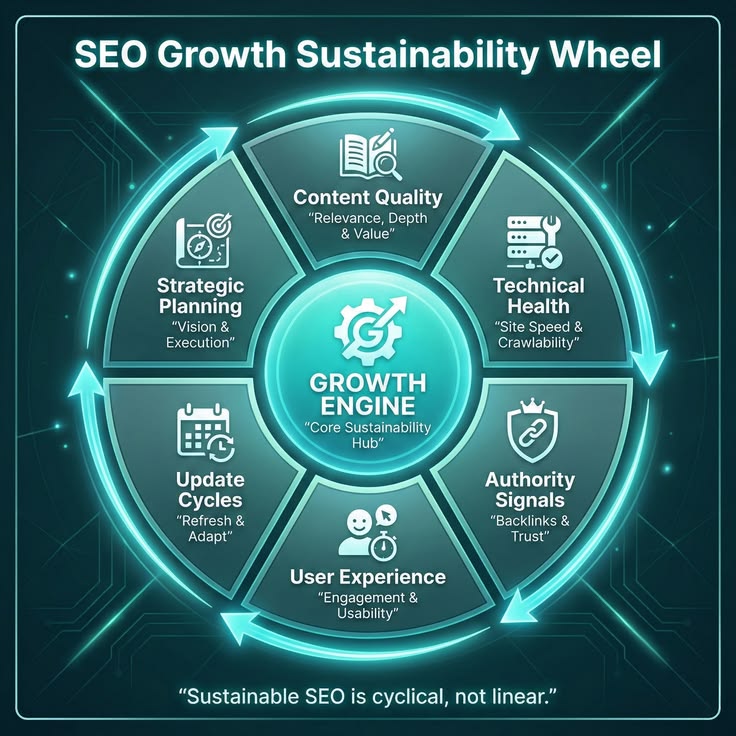
A monthly lead flow strategy solves this problem by turning lead generation into a repeatable system.
For service businesses, predictable lead generation does not come from one channel alone. It comes from connecting your website, SEO, content, landing pages, social proof, lead magnets, paid campaigns, automation, CRM, sales follow-up, and conversion rate optimization.
The goal is not only more leads. The goal is more qualified leads, better consultation bookings, faster follow-up, higher conversion rates, lower customer acquisition cost, and more predictable revenue.
Google’s SEO Starter Guide explains that SEO is about helping search engines understand your content and helping users find your site and decide whether they should visit it. That makes SEO, website clarity, and user decision-making part of the same lead-generation system.
If your service business depends too much on referrals, random campaigns, or inconsistent inquiries, Arevei can help you build a full-funnel lead-generation system.
Visit Arevei to explore conversion-focused websites, CRO, UX improvement, AI marketing automation, landing page optimization, speed optimization, and lead-generation strategy.
What Is a Monthly Lead Flow Strategy?
A monthly lead flow strategy is a structured system for generating, capturing, nurturing, qualifying, and converting leads every month.
It helps a service business move from reactive marketing to predictable growth.
Instead of asking, “Where will leads come from this month?”, the business can answer:
Which channels generate qualified leads?
Which pages convert visitors into inquiries?
Which content attracts the right audience?
Which offers drive consultation bookings?
Which automation improves follow-up?
Which leads are sales-ready?
Which metrics show real ROI?
Which bottlenecks need improvement?
A monthly lead flow strategy connects marketing activity to business outcomes.
Lead Flow vs Random Lead Generation
Random Lead Generation
Monthly Lead Flow Strategy
Depends on referrals or occasional campaigns
Uses repeatable channels and systems
Focuses on lead volume only
Focuses on qualified leads and conversion
Sends traffic to generic pages
Uses conversion-focused pages and landing pages
Follow-up is manual
Follow-up is automated and tracked
Content is created randomly
Content supports the buyer journey
Sales team lacks context
Sales gets lead source and intent data
Results are hard to predict
Performance is measured monthly
Growth depends on urgency
Growth becomes more systematic
Why Predictable Monthly Lead Flow Matters for Service Businesses
Service businesses often sell high-trust, high-consideration offers.
A buyer may not book a consultation immediately. They may compare providers, check proof, read blogs, visit service pages, ask questions, discuss internally, and return later. This means predictable lead generation requires both visibility and nurturing.
Predictable Lead Flow Helps Improve:
Qualified inquiries
Consultation bookings
Sales pipeline stability
Follow-up consistency
Website conversion rate
Campaign ROI
Sales team productivity
Customer acquisition cost
Revenue forecasting
Business confidence
Nielsen Norman Group defines conversion rate as the percentage of users who take a desired action. For service businesses, that action may be a form submission, consultation booking, demo request, quote request, WhatsApp inquiry, or phone call.
This matters because predictable monthly lead flow is not only about traffic. It is about getting the right visitors to take the right action.
The Core Components of a Monthly Lead Flow Strategy
A strong monthly lead flow strategy has seven core components.
1. Clear Offer Positioning
Before building campaigns, content, or landing pages, define what you want to be known for.
Your offer positioning should answer:
Who do you help?
What problem do you solve?
What outcome do you create?
Why should prospects trust you?
What makes your approach different?
What is the next step?
Weak Positioning Example
“We help businesses grow.”
Strong Positioning Example
“We help service businesses turn their website into a predictable lead-generation system through CRO, UX, automation, and full-funnel marketing.”
The second version is stronger because it defines the audience, outcome, and method.
2. Conversion-Focused Website
Your website is the center of your monthly lead flow strategy.
A service business website should not only look credible. It should convert visitors into leads.
A strong website includes:
Clear above-the-fold message
Strong service pages
Specific CTAs
Trust proof
Case studies
Testimonials
Clear process
FAQs
Simple inquiry forms
Booking options
Fast page speed
Mobile-friendly UX
Internal links from blogs to services
If your website gets visits but not inquiries, you may need conversion-focused website development instead of only a design refresh.
3. SEO and Content Engine
SEO helps service businesses attract prospects who are already searching for solutions.
Content should support:
Awareness
Problem education
Solution comparison
Trust building
Objection handling
Consultation booking
Lead nurturing
Google Search Central explains that SEO best practices help search engines crawl, index, and understand content. For service businesses, SEO becomes more effective when the content also helps users make a confident buying decision.
Content Types for Monthly Lead Flow
Content Type
Funnel Stage
Business Purpose
Educational blog
Awareness
Attract problem-aware users
Service page
Consideration
Explain offer and generate inquiries
Case study
Decision
Build trust and proof
FAQ page
Decision
Handle objections
Comparison page
Consideration
Help buyers evaluate options
Lead magnet
Awareness or consideration
Capture leads for nurturing
Email sequence
Nurture
Move leads toward sales conversation
Landing page
Action
Convert campaign traffic
4. Landing Page Strategy
A service business should not send every campaign to the homepage.
Landing pages should be built for specific offers, audiences, and traffic sources.
Use landing pages for:
Google Ads
LinkedIn campaigns
Instagram campaigns
Email campaigns
WhatsApp campaigns
Webinar registrations
Free consultations
Lead magnets
Service-specific promotions
Retargeting campaigns
A strong landing page optimization strategy improves message match between the user’s intent and the page they land on.
5. Lead Capture and Qualification
Not every lead is equal.
A predictable lead flow system should capture the right information without creating friction.
A service business form may ask:
Name
Email
Phone number
Business type
Service interest
Budget range
Timeline
Main problem
Preferred contact method
The goal is to help sales understand intent and prioritize follow-up.
6. Marketing Automation and Lead Nurturing
Many service leads are not ready to buy immediately.
Marketing automation helps keep the conversation alive.
HubSpot explains that lead nurturing is key to moving leads through their path to purchase, and automated nurturing campaigns can make education and follow-up more seamless.
Use automation for:
Inquiry confirmation
Sales team notification
Consultation reminders
Lead nurturing emails
WhatsApp follow-up
Proposal follow-up
Missed lead reactivation
Old lead re-engagement
Review requests
Customer onboarding
AI marketing automation services can help service businesses respond faster, segment leads, and reduce manual follow-up gaps.
7. Analytics and Monthly Optimization
Predictable lead flow requires measurement.
Track:
Traffic by channel
Leads by channel
Qualified leads
Landing page conversion rate
Cost per lead
Cost per qualified lead
Lead-to-consultation rate
Consultation-to-sale rate
Sales response time
Revenue by source
Customer acquisition cost
Without tracking, a business cannot know which channels deserve more investment.
How to Build a Monthly Lead Flow Strategy That Works Every Month
Use this step-by-step framework to create predictable lead generation for your service business.
Step 1: Define Your Monthly Lead Target
Start with the business goal.
Ask:
How many new clients do we need per month?
What is our average close rate?
How many consultations do we need?
How many qualified leads are needed?
How many total inquiries are needed?
Which service offers are most profitable?
Example Calculation
Metric
Example
New clients needed per month
10
Sales close rate
25%
Consultations needed
40
Lead-to-consultation rate
50%
Qualified leads needed
80
In this example, the business needs around 80 qualified leads per month to close 10 new clients if the sales and consultation rates stay stable.
This makes lead generation measurable.
Step 2: Identify Your Best-Fit Customers
A predictable monthly lead flow strategy starts with lead quality.
Define your ideal lead by:
Industry
Business size
Location
Budget
Pain point
Urgency
Decision-maker role
Service need
Growth stage
Buying intent
Example
A generic target audience:
“Business owners.”
A better target audience:
“Service business owners generating website traffic but struggling to turn visitors into consultation bookings.”
Better targeting improves content, campaigns, landing pages, and sales conversations.
Step 3: Create a Clear Offer Ladder
Not every visitor is ready for a sales call.
Create offers for different levels of intent.
Intent Level
Offer Type
Example
Low intent
Educational content
Blog, guide, checklist
Medium intent
Lead magnet or audit
Website audit, growth checklist
High intent
Consultation
Book a strategy call
Sales-ready
Proposal or demo
Request proposal
This helps you capture leads at different stages instead of only waiting for high-intent buyers.
Step 4: Build Website Pages That Convert
Your website should support your lead flow goals.
Important pages include:
Homepage
Main service pages
Industry pages
Case studies
Blog pages
Lead magnet landing pages
Consultation booking page
FAQ page
Contact page
Each page should have:
One clear purpose
One primary CTA
Proof near decision points
Clear next step
Mobile-friendly layout
Fast loading speed
Think with Google found that as mobile page load time goes from one second to ten seconds, the probability of a mobile visitor bouncing increases by 123%. This is why speed matters for lead generation and not only technical performance.
For service businesses, website speed optimization for conversions can help reduce drop-offs before users reach the inquiry stage.
Step 5: Create Search-Intent Content
Content should be mapped to what your buyers search before they inquire.
Content Mapping Table
Buyer Question
Content Type
CTA
What problem do I have?
Educational blog
Read related service page
What solution should I choose?
Comparison guide
Book consultation
How much does it cost?
Pricing guide
Request custom quote
Can I trust this provider?
Case study
Discuss similar project
What happens after I contact you?
Process page
Schedule call
Why is my current system not working?
Diagnostic blog
Get audit
This turns content into a lead-generation asset.
Step 6: Use Landing Pages for Campaign Traffic
Campaign traffic needs focused pages.
A strong landing page includes:
Specific headline
Clear offer
Customer problem
Service outcome
Trust proof
Process
FAQs
Simple form
Strong CTA
Avoid sending paid traffic to generic pages.
A campaign-specific landing page improves relevance, which can improve conversion rate and reduce wasted budget.
Step 7: Build a Lead Nurturing System
Most service businesses lose leads after the first inquiry.
A basic lead nurturing system includes:
Instant confirmation message
Helpful follow-up email
Sales team alert
Consultation reminder
Objection-handling email
Case study email
Re-engagement message
Example Lead Nurture Flow
Day
Message
Goal
Immediately
Confirmation and next step
Reassure the lead
Day 1
Helpful guide or case study
Build trust
Day 3
Common mistakes or FAQ
Handle objections
Day 5
Consultation reminder
Encourage action
Day 10
Relevant proof or results
Rebuild interest
Day 20
Re-engagement message
Recover cold leads
This supports predictable lead generation because not every lead converts immediately.
Step 8: Connect Sales Follow-Up With Lead Source
Sales should know where a lead came from and what the lead already saw.
Track:
Source
Campaign
Landing page
Service interest
Form answers
Lead magnet downloaded
Pages viewed where possible
Follow-up status
Deal stage
This helps sales respond with context.
Example
Instead of saying:
“Thanks for your inquiry. How can we help?”
Sales can say:
“Thanks for requesting a website audit. I noticed you are interested in improving consultation bookings. We can review your website funnel, lead capture, and follow-up system.”
That creates a better buyer experience.
Step 9: Review Lead Quality Every Month
Lead flow should be reviewed monthly, not only when sales are low.
Review:
Which source generated the most leads?
Which source generated the best leads?
Which landing page converted best?
Which service got the most inquiries?
Which leads became consultations?
Which consultations became customers?
Why did leads not convert?
Which follow-ups were missed?
Which content assisted conversions?
This helps you improve the system instead of guessing.
Step 10: Improve One Bottleneck at a Time
Every month, identify the biggest bottleneck.
Bottleneck
Fix
Traffic is low
Improve SEO, content, ads, partnerships
Traffic is high but leads are low
Improve website UX and CTAs
Leads are high but poor quality
Improve targeting and qualification
Leads do not book calls
Improve offer, landing page, and follow-up
Calls do not close
Improve sales process and proof
Ads are expensive
Improve landing page conversion and targeting
Leads go cold
Add automation and nurturing
Mid-Blog CTA: Turn Your Website Into a Lead-Generation Asset
If your service business gets inconsistent inquiries, Arevei can help you build a monthly lead flow strategy that connects traffic, website conversion, landing pages, automation, and sales follow-up.
Need a conversion-focused growth system? Arevei can help improve your website, CRO, UX, automation, speed, and lead-generation strategy so your business can generate more predictable monthly leads.
Practical Mini Case Studies
Mini Case Study 1: Consultant With Referrals but No Predictable Pipeline
Problem
A business consultant gets strong referrals but has no predictable monthly lead flow.
Issues
Website has vague messaging
No service-specific landing pages
No SEO content
No lead magnet
No email nurturing
No CRM tracking
Monthly Lead Flow Fix
Create a clear consulting offer
Build service pages around buyer problems
Publish SEO blogs answering common questions
Add “Book a Strategy Call” CTA
Create a lead magnet checklist
Add automated follow-up emails
Track lead source and consultation status
Expected Outcome
More qualified consultation bookings
Less dependency on referrals
Better sales pipeline visibility
More predictable monthly revenue
Mini Case Study 2: Local Clinic With Traffic but Low Bookings
Problem
A clinic gets website visitors from local searches but few people book appointments.
Issues
Appointment CTA is hidden
Service pages are thin
Doctor credibility is weak
No patient FAQs
Mobile page experience is poor
No appointment reminder automation
Monthly Lead Flow Fix
Add service-specific pages
Improve doctor profiles and trust proof
Add visible “Book Appointment” CTA
Add patient FAQs
Improve mobile UX
Add automated confirmation and reminders
Track appointment bookings by page
Expected Outcome
Higher appointment bookings
Lower drop-offs
Better local lead conversion
Faster follow-up
Mini Case Study 3: Agency With Social Attention but Weak Lead Quality
Problem
An agency gets engagement on social media but few serious inquiries.
Issues
Content is broad
No clear niche positioning
Website does not explain outcomes
No case studies
No qualification form
No follow-up sequence
Monthly Lead Flow Fix
Refine positioning around a specific audience
Create case-study-driven service pages
Build offer-specific landing pages
Add qualification questions
Create a nurture sequence for warm leads
Track lead quality by source
Expected Outcome
Better-fit inquiries
Higher consultation quality
Shorter sales conversations
Improved close rate
Common Mistakes That Make Lead Flow Unpredictable
Mistake 1: Depending Only on Referrals
Referrals are valuable, but they are hard to control.
A predictable lead system should combine referrals with:
SEO
Website conversion
Content
Landing pages
Email nurturing
Paid campaigns
Automation
Retargeting
Partnerships
Mistake 2: Creating Content Without a Conversion Path
Content should not end with “thanks for reading.”
Every blog should guide the reader toward:
A related service page
A consultation
A lead magnet
A case study
A relevant landing page
A contact form
Mistake 3: Sending All Traffic to the Homepage
The homepage is usually too broad for campaign traffic.
Use specific landing pages for specific offers.
Mistake 4: Ignoring Follow-Up Speed
A service lead can lose interest quickly if the response is slow.
Automated confirmations, sales notifications, and reminders reduce the risk of missed opportunities.
Mistake 5: Measuring Only Total Leads
Total lead volume can be misleading.
Track:
Qualified leads
Cost per qualified lead
Lead-to-consultation rate
Consultation-to-client rate
Revenue by channel
Lead response time
Mistake 6: Not Improving the Website Experience
A confusing website can waste good traffic.
Focus on:
Clear messaging
Strong CTA placement
Trust proof
Fast speed
Simple navigation
Mobile usability
Form clarity
Mistake 7: No Monthly Review Process
Predictable lead flow requires regular review.
If you do not review results every month, you will keep repeating the same mistakes.
How to Measure Monthly Lead Flow Success
A monthly lead flow strategy should be measured across the full funnel.
Website Metrics
Website sessions
Traffic by source
Service page visits
CTA click rate
Form completion rate
Landing page conversion rate
Mobile engagement
Page speed performance
Lead Generation Metrics
Total leads
Qualified leads
Leads by source
Cost per lead
Cost per qualified lead
Lead magnet conversions
Consultation bookings
Booking rate by source
Sales Metrics
Lead response time
Follow-up completion rate
Consultation-to-client rate
Proposal sent rate
Close rate
Sales cycle length
Lost lead reasons
Revenue by source
Marketing Automation Metrics
Email open rate
Email click rate
Workflow completion rate
Lead nurture conversion rate
Consultation reminder success
Re-engagement response rate
Old lead reactivation rate
SEO and Content Metrics
Organic impressions
Organic clicks
Keyword rankings
Blog-to-service-page clicks
Assisted conversions
Internal link clicks
FAQ engagement
Content-led leads
Full-Funnel Performance Table
Metric
What It Shows
Traffic by source
Where visitors come from
Landing page conversion rate
Whether the page converts attention into action
Qualified lead rate
Whether targeting and offer are working
Lead-to-consultation rate
Whether follow-up and intent are strong
Consultation-to-client rate
Whether sales process is effective
Cost per qualified lead
Whether acquisition is efficient
Customer acquisition cost
Whether growth is profitable
Revenue by channel
Which channels deserve more investment
Monthly Lead Flow Checklist for Service Businesses
Use this checklist before spending more on ads, content, SEO, or social media.
Strategy Checklist
Clear monthly lead target
Defined ideal customer profile
Clear service positioning
Offer ladder for different buyer intent levels
Defined qualified lead criteria
Documented customer journey
Monthly review process
Website Checklist
Homepage explains value clearly
Service pages target specific buyer needs
CTAs are visible and action-focused
Forms are simple but useful
Trust proof is visible
Case studies are available
FAQs answer real objections
Website is mobile-friendly
Page speed is optimized
Conversion tracking is active
Content Checklist
Blogs target search intent
Content supports the sales funnel
Blogs link to service pages
Case studies support decision-stage buyers
FAQs support objections
Lead magnet is available
Content has clear CTAs
Content performance is reviewed monthly
Landing Page Checklist
One audience
One offer
One primary CTA
Clear headline
Strong proof
Simple form
Mobile-friendly layout
Fast loading speed
Tracking active
Follow-up connected
Automation Checklist
Lead confirmation is instant
Sales notification is instant
Consultation reminders are active
Lead nurturing sequence is live
Old leads can be reactivated
Follow-up tasks are tracked
CRM or lead sheet is updated
Lead source is captured
Sales Follow-Up Checklist
Response time is tracked
Sales team knows lead source
Follow-up templates are ready
Lead status is updated
Objections are documented
Lost lead reasons are reviewed
High-intent leads are prioritized
How Arevei Helps Service Businesses Build Predictable Monthly Lead Flow
Arevei helps service businesses move from inconsistent inquiries to a connected monthly lead-generation system.
Instead of treating website, marketing, CRO, UX, landing pages, automation, and sales follow-up as separate tasks, Arevei helps connect them into one full-funnel growth system.
1. Conversion-Focused Website Development
Arevei builds websites that are designed to generate leads, not only look professional. With conversion-focused website development, your website becomes a lead-generation asset.
2. UX Design for Conversions
Arevei improves the user journey so visitors can understand your offer, trust your business, and take action faster. UX design for conversions helps reduce friction across key pages.
3. Landing Page Optimization Strategy
Arevei creates and improves landing pages for campaigns, consultations, lead magnets, service offers, and ads. A strong landing page optimization strategy helps turn traffic into qualified inquiries.
4. AI Marketing Automation Services
Arevei helps automate lead follow-up, nurturing, reminders, qualification, reactivation, and sales notifications. AI marketing automation services can help your team respond faster and manage more leads consistently.
5. Website Speed Optimization for Conversions
Arevei improves technical performance so visitors have a smoother experience. Website speed optimization for conversions helps reduce drop-offs and improve campaign performance.
6. Full-Funnel Lead-Generation Strategy
Arevei helps connect SEO, content, website pages, landing pages, CRO, automation, CRM, reporting, and sales follow-up into one monthly lead flow strategy.
FAQs
1. What is a monthly lead flow strategy for service businesses?
A monthly lead flow strategy is a repeatable system that helps service businesses attract, capture, nurture, qualify, and convert leads every month. It connects website strategy, SEO, content, landing pages, automation, sales follow-up, and reporting.
2. How can service businesses generate leads every month?
Service businesses can generate leads every month by building a conversion-focused website, publishing search-intent content, creating landing pages for campaigns, using lead magnets, automating follow-up, tracking lead sources, and reviewing performance monthly.
3. Why is predictable lead generation important for service businesses?
Predictable lead generation helps service businesses reduce dependency on referrals, stabilize the sales pipeline, improve consultation bookings, forecast revenue more accurately, and make better decisions about marketing spend.
4. How does marketing automation improve lead flow?
Marketing automation improves lead flow by sending instant confirmations, notifying sales teams, nurturing leads, sending reminders, reactivating old inquiries, and reducing missed follow-up. This helps service businesses convert more leads without depending only on manual effort.
5. What should service businesses measure every month?
Service businesses should measure total leads, qualified leads, traffic source, landing page conversion rate, cost per lead, cost per qualified lead, lead response time, consultation bookings, close rate, customer acquisition cost, and revenue by channel.
6. Can Arevei help build a monthly lead flow strategy?
Yes. Arevei helps service businesses build a monthly lead flow strategy through conversion-focused website development, UX improvement, CRO, landing page optimization, AI marketing automation, website speed optimization, and full-funnel lead-generation strategy. Visit Arevei to learn more.
FAQ Schema
Use FAQ schema for the FAQ section.
Include:
Each FAQ question
Each FAQ answer
Clear answer formatting
Primary keyword in at least one FAQ where natural
This helps search engines understand the question-answer structure of the page.
HowTo Schema
Use HowTo schema for the step-by-step framework.
Include:
Name: How to Build a Monthly Lead Flow Strategy for Service Businesses
Steps from Step 1 to Step 10
Short descriptions for each step
Relevant tools such as website analytics, CRM, automation platform, landing pages, and PageSpeed Insights
This is relevant because the blog gives a practical process readers can follow.
Breadcrumb Schema
Use Breadcrumb schema to show the blog’s location inside the website structure.
Suggested breadcrumb path:
Home
Blog
Monthly Lead Flow Strategy
This improves navigation clarity for search engines and users.
External References Used
Google Search Central: SEO Starter Guide and SEO documentation
Think with Google: Mobile page speed benchmark research
Nielsen Norman Group: Conversion rate definition
HubSpot Academy: Lead nurturing and automation guidance
Conclusion: Build Lead Flow Like a System, Not a Monthly Emergency
Consistent leads do not come from panic marketing.
They come from a connected system that attracts the right audience, converts website visitors, nurtures leads, supports sales follow-up, and improves every month.
A strong monthly lead flow strategy helps service businesses move beyond random referrals and inconsistent inquiries. It turns your website, content, landing pages, automation, CRM, CRO, UX, and reporting into one predictable growth engine.
The business outcome is clear: better leads, higher conversion rates, faster follow-up, lower customer acquisition cost, stronger consultation bookings, and more predictable revenue.
If your service business is ready to build a more consistent lead pipeline, Arevei can help.
Visit https://www.arevei.com/ to build a conversion-focused monthly lead flow system for your service business.
Ready to Build a More Predictable Growth System?
Arevei helps businesses connect strategy, websites, UX, CRO, landing pages, automation, speed optimization, and lead generation into measurable growth systems.